
The intersection of technology and spirituality is no longer a paradox—it’s a powerful gateway to personal transformation, inner peace, and heightened consciousness in our digital age.

🌟 The Dawn of Digital Spirituality
We live in an era where our smartphones are never more than arm’s reach away, where artificial intelligence shapes our daily decisions, and where virtual reality can transport us to distant realms. Yet simultaneously, millions of people worldwide are seeking deeper meaning, spiritual connection, and mindful presence. Rather than viewing these two forces as opposing currents, forward-thinking individuals are discovering how technology can actually accelerate spiritual growth and deepen their practice.
The concept of tech-infused enlightenment might sound contradictory at first. After all, haven’t spiritual teachers throughout history warned against material distractions? Haven’t we been told that true enlightenment requires disconnection from worldly devices? While these perspectives hold wisdom, they often overlook a crucial reality: technology is neither inherently good nor bad—it’s simply a tool. When wielded with intention and wisdom, technological innovations can become powerful allies on the spiritual journey.
Breaking Down the False Dichotomy
The perceived conflict between technology and spirituality stems from a fundamental misunderstanding. Many people associate spirituality exclusively with ancient practices—meditation in mountain caves, silent retreats in remote monasteries, or disconnecting completely from modern life. While these approaches certainly have value, they represent just one path among many.
Technology doesn’t inherently disconnect us from our spiritual essence. Rather, it’s our relationship with technology that determines whether it serves or hinders our growth. A smartphone used mindlessly to scroll through endless social media feeds does indeed distract from presence. However, that same device used intentionally to access guided meditations, spiritual teachings, or connect with like-minded seekers becomes a gateway to expanded consciousness.
The Evolution of Spiritual Practice
Throughout human history, spiritual seekers have always adapted available tools to deepen their practice. Ancient practitioners used prayer beads, bells, and incense. Medieval monks employed manuscripts and candles. Today’s spiritual practitioners are simply continuing this tradition by incorporating digital tools into their journey. The medium changes, but the underlying intention remains constant: to transcend the ego, connect with something greater, and cultivate inner peace.
📱 Meditation Apps: Your Pocket Guru
Perhaps no technological innovation has democratized spiritual practice more than meditation applications. These digital platforms have brought ancient wisdom traditions to millions who might never have otherwise encountered them. Whether you’re a complete beginner or an experienced practitioner, meditation apps offer structured guidance, variety, and consistency that can transform your practice.
Apps like Headspace, Calm, and Insight Timer provide thousands of guided meditations covering everything from basic mindfulness to advanced visualization techniques. They offer sleep stories, breathing exercises, and even courses on Buddhist philosophy or loving-kindness practice. The accessibility is revolutionary—you can practice during your lunch break, while commuting, or before bed, eliminating the excuse of “not having time” for spiritual development.
The gamification elements in many apps—streak counters, achievement badges, and progress tracking—might seem superficial, but they actually leverage psychological principles to build consistent habits. Consistency is the foundation of any spiritual practice, and if technology can help establish that foundation, it serves a valuable purpose.
🎧 Binaural Beats and Brainwave Entrainment
One of the most fascinating intersections of technology and consciousness exploration involves audio technology designed to influence brainwave patterns. Binaural beats work by playing slightly different frequencies in each ear, causing the brain to perceive a third frequency that can induce specific mental states.
Research suggests that different brainwave frequencies correspond to different states of consciousness:
- Delta waves (0.5-4 Hz): Deep sleep and healing
- Theta waves (4-8 Hz): Deep meditation, creativity, and subconscious access
- Alpha waves (8-14 Hz): Relaxed awareness and light meditation
- Beta waves (14-30 Hz): Active thinking and focus
- Gamma waves (30-100 Hz): Higher consciousness and peak mental states
By listening to audio tracks engineered to promote specific brainwave patterns, practitioners can potentially accelerate their entry into meditative states that might otherwise take years of practice to achieve naturally. While this technology doesn’t replace the discipline of traditional meditation, it can serve as valuable training wheels or enhancement for your practice.
Virtual Reality: Immersive Spiritual Experiences
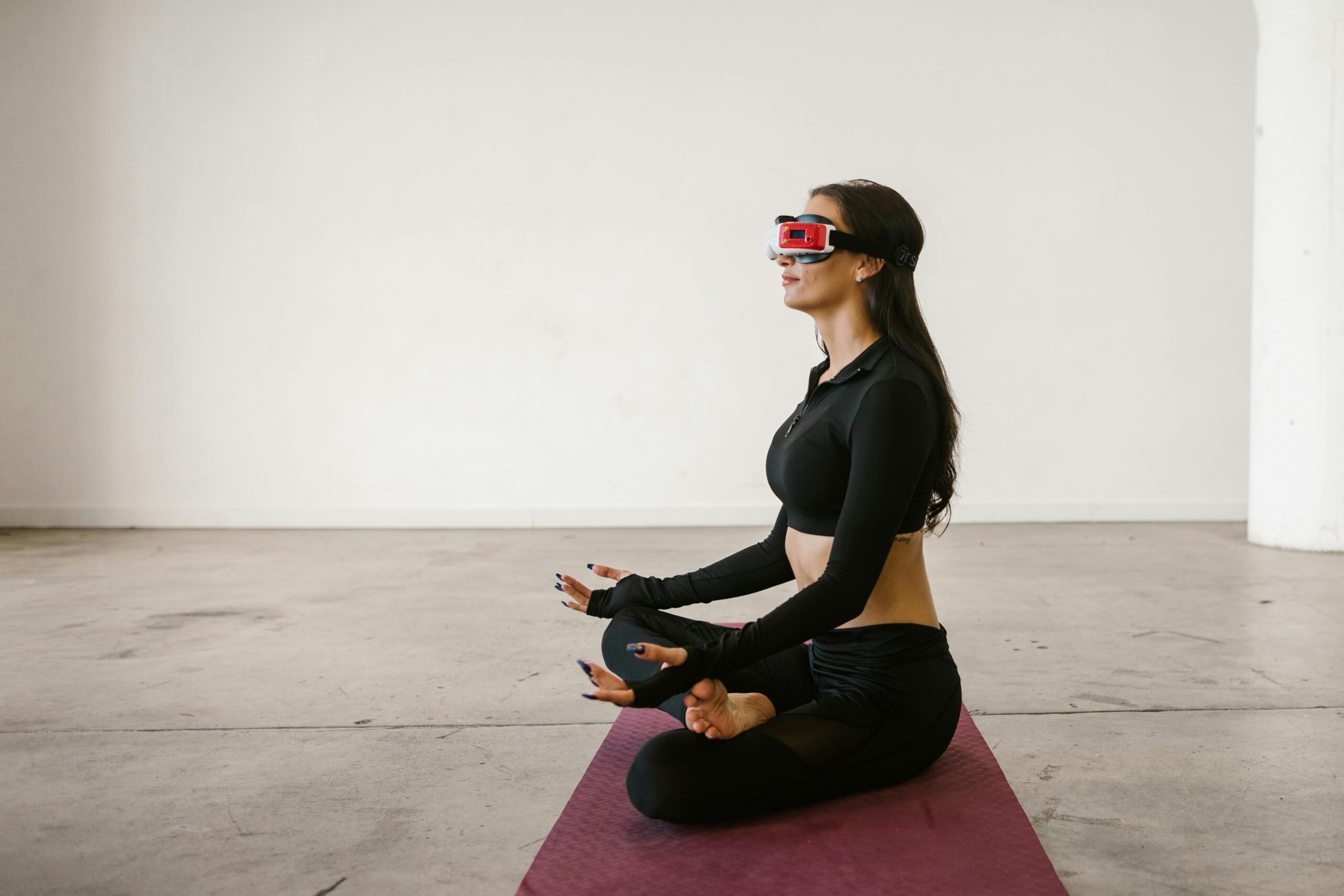
Virtual reality technology is opening entirely new dimensions for spiritual exploration. Imagine donning a VR headset and finding yourself sitting beside a serene mountain lake at sunrise, with realistic sounds of birds chirping and water gently lapping at the shore. Or picture experiencing a guided journey through the chakra system, with visual representations of energy centers illuminating throughout your body.
VR meditation applications create immersive environments that help users transcend their physical surroundings—particularly valuable for those living in noisy urban environments or lacking access to nature. These experiences can also facilitate visualization practices with unprecedented clarity and detail.
Sacred Geometry and Digital Art
Technology enables the creation and exploration of complex sacred geometrical patterns that have spiritual significance across cultures. Interactive digital mandalas, fractal visualizations, and algorithmic art can serve as focal points for contemplation, helping practitioners access altered states of consciousness through visual meditation.
⚡ Wearable Technology for Consciousness Tracking
Fitness trackers and smartwatches have evolved beyond counting steps and monitoring heart rate. Many now include features specifically designed to support mental well-being and spiritual practice. These devices can measure heart rate variability (HRV), a key indicator of stress levels and autonomic nervous system balance.
When you understand your physiological responses to stress, meditation, and different activities, you gain valuable insights into your internal state. Some advanced wearables can detect when you’re becoming stressed and prompt you to take breathing breaks. Others track your meditation sessions, providing data on how your practice affects your overall well-being over time.
This biofeedback loop creates objective measures for subjective experiences. While enlightenment ultimately transcends numbers and metrics, these tools can help you understand what practices genuinely serve your growth versus those that merely feel good in the moment.
🌐 Online Spiritual Communities and Virtual Sanghas
One of the most profound gifts of technology is connection. Regardless of your location, you can now join online communities of practitioners sharing your spiritual interests. Virtual sanghas (Buddhist term for spiritual community) meet via video conferencing for group meditations, dharma discussions, and mutual support.
These digital communities break down geographical barriers that once limited spiritual seekers. Someone living in a small rural town can now study with teachers from Tibet, participate in kirtan with devotees across continents, or join a virtual circle with practitioners of their specific tradition. This democratization of spiritual knowledge and community is unprecedented in human history.
Live-Streamed Teachings and Webinars
Many renowned spiritual teachers now offer live-streamed talks, workshops, and retreats. You can attend teachings from masters you might never have had the opportunity to meet in person. The interactive nature of these events—with chat functions and Q&A sessions—creates a sense of participation and connection despite the digital medium.
AI and Personalized Spiritual Guidance
Artificial intelligence is beginning to play a role in personalized spiritual development. AI-powered chatbots can provide 24/7 support for questions about practice, offer customized meditation recommendations based on your mood and goals, and even engage in philosophical discussions that prompt self-reflection.
While AI will never replace human teachers and genuine spiritual relationships, it can serve as a supplementary resource, particularly for beginners who might feel intimidated approaching traditional spiritual communities or teachers. Think of AI as a preliminary guide that can point you in the right direction before you find your human teachers and community.
📊 Journaling Apps and Digital Reflection
Spiritual journaling has long been recognized as a powerful tool for self-awareness and growth. Digital journaling apps enhance this practice with features like:
- Searchable entries that let you track patterns in your thoughts and experiences over time
- Prompts and templates specifically designed for spiritual reflection
- Mood tracking and gratitude logs integrated with your written reflections
- Encryption and privacy features that create safe spaces for vulnerable self-exploration
- Multi-media integration, allowing you to include photos, voice notes, and videos in your spiritual documentation
The ability to search through years of journal entries and discover how you’ve grown, what patterns repeat, and which practices have yielded the most profound insights is invaluable for serious practitioners committed to self-knowledge.
Balancing Tech Enhancement with Genuine Practice
While technology offers remarkable tools for spiritual development, it’s essential to maintain balance and discernment. The map is not the territory—no app, device, or digital experience can substitute for genuine inner work, discipline, and direct experience of consciousness.
Technology works best as a support system for your practice, not as the practice itself. A meditation app can guide you into stillness, but you must actually sit in that stillness. A wearable device can show you your stress levels, but you must do the work to transform your relationship with stress. Virtual communities can support your journey, but you must walk the path yourself.
Creating Healthy Boundaries
To prevent technology from becoming another distraction or addiction, establish clear boundaries around your digital spiritual practice:
- Designate specific times for using spiritual apps versus unplugged practice
- Turn off non-essential notifications during meditation and reflection time
- Regularly assess whether your tech tools are genuinely serving your growth or becoming crutches
- Balance digital practice with nature immersion and in-person community when possible
- Remember that the ultimate goal is presence—if technology detracts from presence, modify your approach
🔮 The Future of Technologically-Enhanced Spirituality
As we look toward the future, the integration of technology and spirituality will likely deepen in ways we’re only beginning to imagine. Emerging technologies on the horizon include:
Neurofeedback devices that provide real-time information about your brain activity during meditation, allowing you to learn to consciously shift into desired states. These devices are becoming increasingly affordable and accessible, potentially revolutionizing how quickly people can develop meditative abilities.
Holographic teachers using augmented reality to place life-like representations of spiritual guides in your physical space, creating more immersive learning experiences than video ever could.
Collective consciousness platforms that aggregate anonymized data from thousands of practitioners to identify which techniques and approaches yield the most consistent results for different personality types and goals.
Advanced biometrics that measure not just physical indicators but potentially subtle energy phenomena, providing new ways to understand and validate subjective spiritual experiences.
Practical Steps to Begin Your Tech-Infused Spiritual Journey
Ready to explore how technology can enhance your spiritual practice? Start with these actionable steps:
Week 1: Download a meditation app and commit to using it for just 10 minutes daily. Pay attention to how guided digital meditation compares to unguided practice you may have tried before.
Week 2: Join an online spiritual community aligned with your interests. Participate in at least one discussion or virtual gathering. Notice how digital connection affects your sense of spiritual community.
Week 3: Experiment with binaural beats or other brainwave entrainment audio. Compare your experience meditating with and without these tools.
Week 4: Start a digital spiritual journal. Write daily reflections on your practice, insights, and questions. Use search and tagging features to identify patterns.
As you incorporate these technologies, maintain a spirit of experimentation and self-inquiry. What works for others may not work for you, and that’s perfectly fine. The key is approaching these tools with intention, discernment, and the understanding that they serve your spiritual growth rather than define it.
🕉️ Embracing the Integration
The future of spirituality is not about choosing between ancient wisdom and modern innovation—it’s about integrating both. Our ancestors used the best tools available to them in their quest for enlightenment. We honor their legacy not by rejecting progress, but by applying that same creative spirit to leverage contemporary resources for timeless pursuits.
Technology, when used mindfully, can remove barriers to practice, provide supportive community, offer personalized guidance, and create conditions conducive to inner exploration. It can make spiritual development more accessible, measurable, and sustainable for modern practitioners juggling the demands of contemporary life.
The ultimate measure of tech-infused spirituality is simple: does it lead to greater peace, compassion, awareness, and wisdom in your life? Does it help you become more present, more loving, and more awake? If the answer is yes, then technology is serving its highest purpose—as a vehicle for human flourishing and consciousness evolution.
Your spiritual journey is uniquely yours. The tools you choose—whether ancient or cutting-edge—matter far less than the sincerity of your seeking and the depth of your commitment to awakening. In this light, technology becomes not a distraction from the sacred, but another expression of humanity’s eternal quest to transcend limitation and touch the infinite. The smartphone in your pocket might just be the doorway to your next breakthrough in consciousness. The question isn’t whether to integrate technology with spirituality, but how to do so with wisdom, balance, and genuine intention for transformation.