
EEG devices are transforming how we understand and optimize our mental performance, offering unprecedented access to our brain’s electrical activity in real-time.

🧠 The Revolutionary World of Brain Wave Monitoring
The human brain generates electrical impulses constantly, creating patterns that reflect our mental states, emotions, and cognitive processes. For decades, electroencephalography (EEG) technology remained confined to clinical settings and research laboratories. Today, consumer-grade EEG devices have democratized access to this powerful technology, allowing individuals to monitor, analyze, and optimize their brain function from the comfort of their homes.
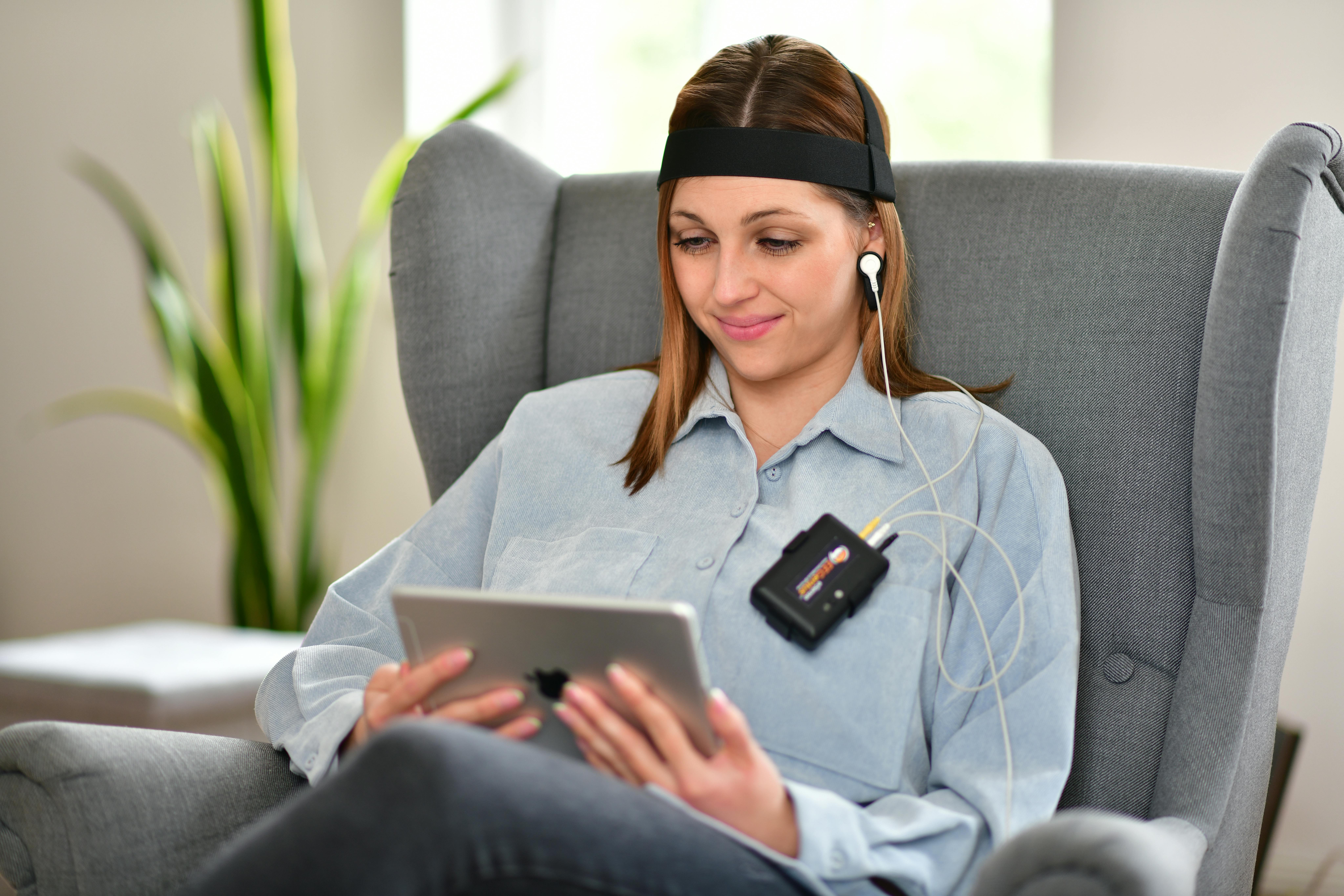
These portable devices use sensors to detect electrical activity across different regions of your scalp, translating complex neural signals into actionable insights. What once required expensive medical equipment and specialized technicians can now fit in your pocket or rest comfortably on your head like a pair of headphones.
The implications are profound. Whether you’re an athlete seeking peak performance, a professional aiming to enhance productivity, a student looking to improve focus, or someone exploring meditation and mindfulness, EEG technology provides objective feedback about what’s happening inside your mind.
Understanding the Science Behind EEG Technology
Your brain consists of approximately 86 billion neurons that communicate through electrical and chemical signals. When groups of neurons fire synchronously, they create oscillating electrical patterns called brain waves. EEG devices detect these oscillations through sensors placed on the scalp, measuring voltage fluctuations that occur as neurons communicate.
Brain waves are categorized into five primary frequency bands, each associated with different mental states:
- Delta waves (0.5-4 Hz): Deep, dreamless sleep and unconscious bodily functions
- Theta waves (4-8 Hz): Light sleep, deep meditation, creativity, and intuition
- Alpha waves (8-13 Hz): Relaxed alertness, reflection, and mental coordination
- Beta waves (13-30 Hz): Active thinking, focus, problem-solving, and conversation
- Gamma waves (30-100 Hz): High-level information processing, learning, and peak concentration
Modern EEG devices can differentiate between these frequencies, providing detailed feedback about which brain states dominate your mental activity at any given moment. This information becomes the foundation for targeted brain training protocols.
How EEG Devices Enable Personalized Mind Training
The true power of consumer EEG technology lies in its ability to create biofeedback loops. Unlike traditional meditation or focus training, which rely on subjective feelings, EEG devices provide objective, quantifiable data about your mental state. This transforms vague concepts like “being focused” or “feeling relaxed” into measurable metrics you can track and improve.
When you wear an EEG device during cognitive activities, it monitors your brain wave patterns in real-time. Many devices connect to smartphone applications that visualize this data, showing you exactly when your mind wanders, when you achieve deep focus, or when stress levels spike. Some advanced systems even provide audio or visual cues to help guide you back to desired mental states.
This immediate feedback accelerates the learning process dramatically. Research suggests that neurofeedback training—the practice of modifying brain activity based on real-time EEG data—can improve attention, reduce anxiety, enhance memory, and even alleviate symptoms of various neurological conditions.
🎯 Practical Applications for Peak Mental Performance
The versatility of EEG devices makes them valuable across numerous domains of human performance and wellbeing. Athletes have begun incorporating brain training into their regimens alongside physical conditioning, recognizing that mental clarity and emotional regulation directly impact competitive performance.
Professional environments are also embracing this technology. Workers in high-stress fields use EEG devices to identify optimal times for deep work versus collaborative activities, managing their cognitive resources more effectively throughout the day. The data reveals patterns you might never notice through introspection alone, such as energy dips at specific times or improved focus following certain activities.
Students and lifelong learners leverage EEG technology to optimize study sessions. By monitoring brain states during learning activities, they can identify which study methods generate the most productive neural patterns and adjust their techniques accordingly. Some users discover they learn best with background music, while others find complete silence necessary—and the EEG data provides objective validation.
Meditation and Mindfulness Enhancement
Perhaps nowhere has consumer EEG technology made a bigger impact than in meditation practice. Traditional meditation instruction relies heavily on subjective descriptions of mental states that can be difficult for beginners to recognize or achieve. EEG devices remove this ambiguity by showing practitioners exactly when they’ve reached meditative brain states.
Several meditation-focused EEG headbands have emerged, specifically designed to guide users into deeper states of calm and presence. These devices typically provide gentle audio feedback that changes based on your brain activity, creating an engaging experience that makes meditation more accessible and measurable.
The quantified approach to meditation appeals to those who might otherwise struggle with traditional practices. Seeing tangible progress through metrics and graphs provides motivation and validation, encouraging consistent practice that leads to genuine skill development over time.
Choosing the Right EEG Device for Your Goals
The consumer EEG market has expanded considerably, offering devices across various price points and feature sets. Understanding what differentiates these options helps you select the technology that best aligns with your objectives and budget.
Entry-level devices typically feature fewer sensors (often single-channel or dual-channel) and focus on specific applications like meditation or basic focus tracking. These affordable options provide a gateway into brain monitoring without significant financial commitment, making them ideal for those curious about the technology or working on straightforward mental training goals.
Mid-range devices offer more sensors (usually 4-8 channels) distributed across the scalp, providing higher resolution data about brain activity in different regions. These systems often include more sophisticated software with detailed analytics, training programs, and progress tracking. They suit serious enthusiasts and professionals seeking comprehensive cognitive optimization.
High-end consumer and semi-professional EEG systems feature 14 or more channels, approaching the fidelity of clinical equipment at a fraction of the cost. These devices enable advanced applications like cognitive research, complex neurofeedback protocols, and brain-computer interfaces. They represent significant investments but offer unparalleled capability for dedicated users.
Key Features to Consider
| Feature | Why It Matters |
|---|---|
| Number of Sensors | More sensors provide higher spatial resolution and more detailed brain activity mapping |
| Sampling Rate | Higher rates (256 Hz or above) capture more detailed brain wave information |
| Battery Life | Longer battery enables extended training sessions without interruption |
| Comfort and Fit | Poor fit leads to signal interference and reluctance to use the device regularly |
| Software Ecosystem | Quality applications transform raw data into actionable insights and engaging experiences |
| Data Export Options | Access to raw data enables advanced analysis and integration with other tools |
Beyond technical specifications, consider the device ecosystem. Some manufacturers maintain proprietary systems with limited software options, while others embrace open platforms that work with third-party applications. The latter approach offers greater flexibility but may require more technical knowledge to fully exploit.
⚡ Building an Effective Brain Training Protocol
Owning an EEG device is just the beginning—the real value emerges through consistent, purposeful practice. Establishing a structured training protocol maximizes the benefits while preventing the device from becoming an expensive novelty that gathers dust.
Start by defining clear objectives. Are you primarily interested in improving focus and concentration? Reducing stress and anxiety? Enhancing creativity? Optimizing sleep quality? Different goals require different training approaches, and clarity of purpose guides your practice direction.
Consistency matters more than duration. Research on neuroplasticity demonstrates that regular, brief practice sessions produce better long-term results than sporadic marathon sessions. Aim for daily 10-15 minute sessions rather than weekly hour-long attempts. This approach builds sustainable habits and allows your brain to gradually adapt and optimize.
Establishing Your Baseline
Before jumping into training protocols, spend at least a week collecting baseline data. Wear your EEG device during various activities—working, relaxing, exercising, meditating—to understand your natural brain patterns. This baseline becomes the reference point for measuring progress and identifying which interventions produce meaningful changes.
During baseline collection, note contextual factors that might influence brain activity: sleep quality, caffeine consumption, stress levels, time of day, and environmental conditions. These variables significantly impact EEG readings, and awareness of their influence helps you interpret data accurately and design effective experiments.
Advanced Techniques for Mind Optimization
Once you’ve mastered basic EEG-guided practices, several advanced techniques can take your mental training to the next level. Neurofeedback protocols allow you to specifically target and modify particular brain wave patterns associated with desired mental states.
Alpha-theta training, for instance, helps increase the ratio of theta to alpha waves, promoting deep relaxation and access to subconscious material. This protocol has shown promise for addressing anxiety, enhancing creativity, and supporting addiction recovery. Sessions typically involve guided relaxation while monitoring the emergence of theta activity, with audio or visual rewards when target ratios are achieved.
Beta training focuses on enhancing the fast brain waves associated with active concentration and alertness. This approach benefits individuals with attention difficulties or those seeking to enhance cognitive performance during demanding tasks. The training gradually shapes beta wave production through reward-based feedback, strengthening neural pathways that support sustained focus.
Peak performance training combines EEG monitoring with specific cognitive challenges—memory games, problem-solving tasks, or skill practice. By observing which brain patterns correlate with your best performance, you learn to recognize and reproduce optimal mental states on demand. Elite athletes and professionals use variations of this approach to develop consistent access to flow states.
🌟 The Future of Personal Brain Technology
Current consumer EEG devices represent just the beginning of accessible neurotechnology. Emerging developments promise even more powerful tools for understanding and optimizing human cognition in the coming years.
Artificial intelligence integration is already enhancing EEG applications, with machine learning algorithms detecting subtle patterns in brain data that humans might miss. These systems can predict optimal times for different types of cognitive work, identify early signs of mental fatigue before you consciously feel tired, and personalize training protocols based on your unique neural responses.
Brain-computer interfaces (BCIs) are evolving beyond research laboratories into consumer products. These systems translate brain signals into commands that control external devices—computers, smartphones, smart home systems, even prosthetic limbs. While current consumer BCIs offer limited functionality, rapid advancement suggests increasingly sophisticated mind-machine interaction in the near future.
Multi-modal devices combining EEG with other biosensors—heart rate variability, skin conductance, eye tracking—provide holistic views of your physiological state. This integration reveals relationships between mental activity, emotional responses, and physical conditions, enabling more nuanced optimization strategies that address mind-body interactions.
Maximizing Your Investment in Brain Technology
Consumer EEG devices represent significant investments of both money and time. Maximizing return on that investment requires strategic approach and realistic expectations. These tools offer genuine benefits, but they’re not magic solutions—improvement comes through consistent application and patience.
Join communities of other users, whether through official forums, social media groups, or local meetups. Sharing experiences, troubleshooting challenges, and discovering new applications accelerates your learning curve and maintains motivation. Many users report that community connection transforms their practice from solitary experimentation into engaging collaborative exploration.
Document your journey systematically. Beyond the data your device automatically collects, maintain qualitative notes about subjective experiences, life circumstances, and observations about how brain training affects your daily functioning. Over time, these records reveal connections and patterns that numbers alone might miss.
Experiment deliberately and methodically. Rather than trying every available feature simultaneously, implement one variable change at a time. This scientific approach clarifies which interventions actually produce benefits versus which might be placebo effects or coincidental improvements.
💡 Transforming Data Into Wisdom
The ultimate value of EEG technology isn’t the devices themselves or even the data they generate—it’s the self-knowledge and practical skills you develop through their use. These tools provide unprecedented windows into your mental functioning, but wisdom comes from thoughtfully interpreting and applying what you learn.
Many users discover surprising truths about their minds. You might find that your self-perception of being “stressed” doesn’t always match your brain’s actual stress patterns, or that activities you assumed were relaxing actually generate anxious brain states. These insights challenge assumptions and open possibilities for more effective self-regulation strategies.
The practice of regularly monitoring your brain activity cultivates metacognition—awareness of your own thought processes. This heightened self-awareness extends beyond EEG sessions, helping you recognize mental states in real-time during daily life. You begin noticing when your mind wanders, when stress builds, when focus sharpens, developing the ability to consciously shift states as situations demand.
Remember that EEG devices measure correlates of mental activity, not thoughts themselves. They show patterns of electrical activity associated with various mental states, but interpretation requires both scientific knowledge and personal wisdom. Use these tools as guides and feedback mechanisms, not as definitive authorities on your subjective experience.
Taking Your First Steps Toward Mental Mastery
The journey into brain optimization through EEG technology begins with a single session. Start simply, perhaps with a basic meditation or focus exercise while wearing your device. Observe the data without judgment, approaching it with curiosity rather than performance pressure.
Give yourself permission to experiment and make mistakes. Brain training is genuinely novel for most people—there’s no shame in confusion or slow progress initially. The technology may seem intimidating at first, but most users find the learning curve less steep than anticipated once they dive in.
Set reasonable expectations for your timeline. While some people notice improvements within weeks, meaningful neuroplastic changes typically require months of consistent practice. Think of brain training like physical fitness—quick results are possible, but lasting transformation demands sustained effort over extended periods.
Most importantly, maintain perspective about these tools’ role in your overall wellbeing. EEG devices are powerful aids for self-development, but they complement rather than replace other healthy practices. Continue prioritizing good sleep, proper nutrition, physical exercise, social connection, and professional support when needed. Brain technology works best when integrated into a holistic approach to human flourishing.
The potential locked within your mind is vast, and EEG technology offers unprecedented tools for accessing that potential. By providing objective feedback about your brain’s activity, these devices accelerate the ancient human quest for self-mastery and mental optimization. Whether your goals involve peak performance, stress reduction, creative enhancement, or simple curiosity about your inner workings, consumer EEG devices make neuroscience accessible in ways previous generations could never imagine. Your brain is the most complex structure in the known universe—isn’t it time you got to know it better? 🚀